Fee Download A Disease Called Childhood: Why ADHD Became an American Epidemic, by Marilyn Wedge
There is no doubt that publication A Disease Called Childhood: Why ADHD Became An American Epidemic, By Marilyn Wedge will certainly constantly offer you motivations. Also this is just a publication A Disease Called Childhood: Why ADHD Became An American Epidemic, By Marilyn Wedge; you can locate many categories and types of publications. From delighting to journey to politic, as well as sciences are all offered. As exactly what we explain, below our company offer those all, from famous authors as well as author on the planet. This A Disease Called Childhood: Why ADHD Became An American Epidemic, By Marilyn Wedge is among the compilations. Are you interested? Take it currently. How is the method? Find out more this article!
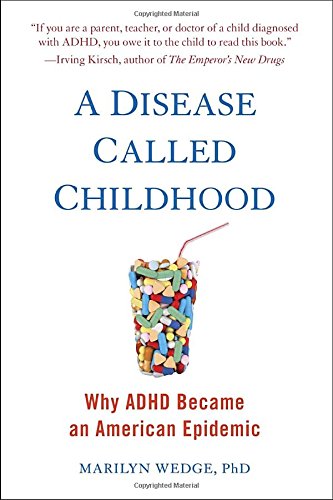
A Disease Called Childhood: Why ADHD Became an American Epidemic, by Marilyn Wedge

Fee Download A Disease Called Childhood: Why ADHD Became an American Epidemic, by Marilyn Wedge
A Disease Called Childhood: Why ADHD Became An American Epidemic, By Marilyn Wedge. Offer us 5 mins and also we will certainly reveal you the most effective book to read today. This is it, the A Disease Called Childhood: Why ADHD Became An American Epidemic, By Marilyn Wedge that will certainly be your best selection for far better reading book. Your 5 times will certainly not spend lost by reading this internet site. You could take guide as a source making far better principle. Referring guides A Disease Called Childhood: Why ADHD Became An American Epidemic, By Marilyn Wedge that can be located with your requirements is sometime challenging. But below, this is so simple. You could discover the very best point of book A Disease Called Childhood: Why ADHD Became An American Epidemic, By Marilyn Wedge that you can check out.
It can be one of your early morning readings A Disease Called Childhood: Why ADHD Became An American Epidemic, By Marilyn Wedge This is a soft data publication that can be managed downloading and install from on-line book. As known, in this innovative era, innovation will certainly reduce you in doing some tasks. Even it is just checking out the presence of book soft file of A Disease Called Childhood: Why ADHD Became An American Epidemic, By Marilyn Wedge can be additional function to open up. It is not just to open up and save in the gadget. This time in the early morning as well as other free time are to read the book A Disease Called Childhood: Why ADHD Became An American Epidemic, By Marilyn Wedge
The book A Disease Called Childhood: Why ADHD Became An American Epidemic, By Marilyn Wedge will certainly still make you favorable value if you do it well. Finishing the book A Disease Called Childhood: Why ADHD Became An American Epidemic, By Marilyn Wedge to read will certainly not become the only objective. The objective is by getting the good value from the book up until completion of guide. This is why; you have to find out even more while reading this A Disease Called Childhood: Why ADHD Became An American Epidemic, By Marilyn Wedge This is not only just how fast you check out a book and also not just has the amount of you completed guides; it has to do with exactly what you have actually gotten from guides.
Taking into consideration the book A Disease Called Childhood: Why ADHD Became An American Epidemic, By Marilyn Wedge to review is also needed. You could decide on guide based upon the preferred motifs that you like. It will certainly engage you to enjoy reviewing other publications A Disease Called Childhood: Why ADHD Became An American Epidemic, By Marilyn Wedge It can be additionally regarding the necessity that obliges you to read guide. As this A Disease Called Childhood: Why ADHD Became An American Epidemic, By Marilyn Wedge, you could locate it as your reading publication, also your favourite reading book. So, locate your preferred book here and get the link to download and install the book soft data.
A family therapist offers a surprising new look at the rise of ADHD in America, arguing for a better paradigm for diagnosing and treating our children.
Since 1987, the number of American children diagnosed with ADHD has jumped from 3 to 11 percent. Meanwhile, ADHD rates remain relatively low in other countries such as France, Finland, the UK, and Japan, where the number of children diagnosed with and medicated for ADHD is 1 percent or less. Alarmed by this trend, family therapist Marilyn Wedge set out to understand how ADHD became an American epidemic—and to find out whether there are alternative treatments to powerful prescription drugs.
In A Disease Called Childhood, Wedge examines the factors that have created a generation addicted to stimulant drugs. Instead of focusing only on treating symptoms, she looks at the various potential causes of hyperactivity and inattention in children, and behavioral and environmental—as opposed to strictly biological—treatments that have been proven to help. In the process, Wedge offers a new paradigm for child mental health—and a better, happier, and less medicated future for American children.
- Sales Rank: #173756 in Books
- Brand: Wedge Marilyn
- Published on: 2016-03-15
- Released on: 2016-03-15
- Original language: English
- Number of items: 1
- Dimensions: 8.30" h x .70" w x 5.70" l, .0 pounds
- Binding: Paperback
- 272 pages
Features
- A Disease Called Childhood Why ADHD Became an American Epidemic
Review
“This reflective, carefully researched and well-written book exposes the cultural wounding of our children by Big Pharma and ill-advised adults. Wedge's book is a much needed call to action for advocates of children everywhere.”
—Mary Pipher, bestselling author of Reviving Ophelia and The Green Boat
"One of the most important and persuasive books I've read in years. If you are a parent, teacher, or doctor of a child diagnosed with ADHD, you owe it to the child to read this book."
—Irving Kirsch, author of The Emporer's New Drugs: Exploding the Antidepressant Myth
"In this ocmpelling book, Marilyn Wedge provides readers with an in-depth understanding of the rise of ADHD, a skillful deconstruction of the science used to promote the selling of stimulants for the disorder, and--most important of all--a guide for thinking of alternative approaches to helping our children. This is an antidote to the common wisdom about ADHD that our society needs to know."
—Robert Whitaker, author of Anatomy of an Epidemic: Magic Bullets, Psychiatric Drugs, and the Astonishing Rise of Mental Illness in America
“A Disease Called Childhood is strongly recommended for parents who wish to understand the ADHD diagnosis and learn specific techniques that may be helpful for their children.”
—Stuart Kaplan, M. D., Clinical Professor of Psychiatry at Penn State College of Medicine and author of Your Child Does not Have Bipolar Disorder
“A Disease Called Childhood is a very readable analysis of the hoax that American psychiatry and Big Pharma have perpetrated for the past 40 years to redefine children’s normal behaviors as some form of brain disease. Marilyn Wedge has written a proper antidote to this unnecessary medicalization, by encouraging us to re-examine the quality of the family, school, and social environments that we provide for our children.”
—Stuart A. Kirk, Distinguished Professor Emeritus, Luskin School of Public Affairs, UCLA, author of The Selling of DSM, Making Us Crazy, and Mad Science
"[Wedge's] affable approach and compassionate universal concern for the wellness of children are evident throughout. In an important read for open-minded parents, Wedge offers fresh perspectives and practical approaches to the continuing ADHD conundrum."
—Kirkus Reviews
"It's one of those parenting books that I just wanted to jump on the roof and shout about because it's really that good. It's not just for parents who are at the end of the road with schools wanting a psychiatric diagnosis for the behaviour of their children, it's also a roadmap on how to not end up there in the future."
—Blogher
About the Author
Marilyn Wedge is a practicing family therapist with a Ph.D. in social psychology from the University of Chicago, where she received a grant from the prestigious Danforth Foundation. She was a postdoctoral fellow in ethics at the Hastings Center, a nonprofit institution dedicated to bioethics. Wedge is the author of Suffer the Children: The Case Against Labeling and Medicating and an Effective Alternative, which was published in paperback with the title Pills Are Not for Preschoolers: A Drug-Free Approach for Troubled Kids.
Excerpt. © Reprinted by permission. All rights reserved.
AUTHOR’S NOTE
In order to uphold therapist-client confidentiality, I have changed the names and identifying features of the clients mentioned in this book. The processes and outcomes of the therapy sessions are real. Family therapy relies for its integrity on the accuracy of case studies. The people and conversations I relate are composites that I have adapted conceptually from a number of individual cases from my twenty-five years of practice. Any resemblance of the composite characters or therapies to any actual person is entirely coincidental.
INTRODUCTION
A Season in Childhood
In 1988, when I started my practice as a child therapist, I had barely heard of attention-deficit/hyperactivity disorder, or what is typically called ADHD. The diagnosis had arrived on the scene a year earlier, in the third revised edition of the Diagnostic and Statistical Manual of Mental Disorders (DSM-III-R), the book doctors use to diagnose mental disorders in children and adults. Previous iterations of the manual had identified various types of hyperactivity and attention problems in children, including attention deficit disorder (ADD), the precursor to ADHD, in 1980. But this was the first time the term ADHD as we know it today appeared. According to the DSM, to warrant a diagnosis of ADHD, a child had to exhibit eight symptoms of hyperactivity, inattentiveness, or impulsivity (from a checklist of fourteen) for at least six months. The checklist included things such as “is easily distracted” or “often interrupts” or “intrudes on others.”
Despite its codification in the DSM, at the time ADHD was not widely discussed among child therapists, let alone parents, teachers, and pediatricians, as it is today. Psychoanalytically minded child therapists (those inspired by the work of Sigmund Freud) saw children’s problems as the expression of inner conflicts, while family systems therapists like me considered kids’ problems responses to stressful situations in their social context: at home, at school, or with their friends. We saw no reason to formalize a diagnosis for behavior that child therapists had been successfully treating for years. So we ignored it.
For a while, that was fine. From the time I started my practice until the middle of the 1990s, not one mother or father ever asked me if I thought their child had ADD or ADHD. If their child’s behavior changed, parents assumed something was worrying or stressing their child. They came to me to discover the source of stress.
From my point of view, behavioral problems such as aggression, disobedience, or other behaviors commonly associated with ADHD, such as inattention and hyperactivity, are signs that something is wrong in a child’s life—either extreme trauma, like abuse or poverty, or something more typical, like a lack of discipline or a difficult family transition. Children are not fully developed mentally or behaviorally. Negative emotions that arise from lack of structure or difficult circumstances in their environments usually manifest themselves in their behavior, since children are not equipped to express themselves directly. I was used to treating children’s symptoms as responses to rough patches in their family life or troubled relationships with friends or at school. I helped children cope with sadness or anxiety, compulsive behaviors or aggressiveness, inattentiveness at school or moodiness at home by discovering the cause of the child’s distress.
Of course, I saw plenty of children who were jumpy, disruptive, fidgety, oppositional, or uninterested in school. In these cases, parents generally came to me to ask if I could help them keep the behavior in check, sometimes after a teacher had complained that a child was interrupting class or refusing to do assignments. I typically came up with behavioral solutions for these kids. I advised parents to create a solid plan for discipline, to stay calm, not to yell, to give their child time to mature, to reward good behavior, to invoke consequences for mischief, and so forth. At times, I attended a meeting at the child’s school and worked with the child’s parents, teacher, and school counselor to find specific ways to help the child in the classroom. For particularly active kids—more often boys than girls—I recommended that parents enroll them in a sport or encourage them to ride their bikes as an outlet for their extra energy. Even in cases where something specific—such as divorce, a parent’s injury or illness, or another disruption in the child’s life—was causing the distress, I could usually work with parents and children to address the problem, talk to the child, and figure out a way for them to move past it. These techniques usually worked.
Not every misbehavior was rooted in a troubling situation at home. In those days, some degree of naughtiness and wildness was tolerated and even expected in children, especially in boys. If parents had a little Dennis the Menace at home, well, that was just boys being boys. Impulsive, distractible kids who occasionally rebelled against the authority of adults were considered naughty but normal. Nobody would have suggested that Dennis the Menace or Beaver Cleaver had a mental disorder that required medication. Nobody would have suggested that Huck Finn’s chronic truancy was the sign of a mental illness. A teaspoon of discipline, not a dose of psychiatric medication, was the cure for naughty children. Most people thought the only “disease” that afflicted kids like that was called childhood.
Toward the end of the 1990s, I began to see changes in my practice. More children were coming in to be evaluated for ADHD, often on the recommendation of their teachers. Around 2000, a worried father brought his six-year-old son, Liam, to see me after the boy’s teacher said he wasn’t keeping up with the rest of his class. The teacher worried that even though Liam was bright, he was falling behind. Liam’s father was an epidemiologist with a medical degree from UCLA. He told me in a grim voice that he thought his son had ADHD. I was struck by the fact that he seemed to think of ADHD as a disease that needed to be treated—something you have rather than a series of symptoms you exhibit. But I couldn’t blame him. The number of children who were being diagnosed with ADHD was skyrocketing. By 2000, approximately 7 percent of children in the United States had the diagnosis, up from 3 percent in 1987. By 2014, the number was 11 percent for children and 15 percent for high school kids. It did seem like an epidemic.
Liam wasn’t fidgety or squirmy, but he had trouble focusing and finishing his schoolwork. Sometimes he’d forget to bring home his backpack and would miss several homework assignments. I discovered that Liam was one of the youngest children in his first-grade class. Some of his classmates were already seven, whereas Liam had turned six just before he started first grade. Perhaps, I thought, he simply lacked the maturity to keep up with his classmates in the fast-paced, academically oriented elementary school he attended.
I recommended that Liam’s mother and father take turns sitting down with him in the evening while he did his homework and offer him help when he needed it. I suggested they keep the television turned off during homework time so that the noise wouldn’t distract him. The parents also made an arrangement with Liam’s teacher to contact her by e-mail if Liam forgot to bring home his backpack. The teacher would then e-mail them the homework assignment for that day so Liam wouldn’t fall behind. With the extra support and attention, Liam soon caught up with the other students.
Fortunately, we were able to resolve Liam’s school problems without referring him to a doctor for medication. However, the epidemic continued to grow for many children. By 2010, Centers for Disease Control and Prevention data indicated that more than ten million American children and teens had been diagnosed with ADHD in doctors’ offices. Medication became the go-to solution for kids who were hard to control or struggled at school. Doctors typically prescribed psychostimulant medications such as Ritalin and Adderall to help kids sit still and focus. These medications were not new in the medical arsenal—stimulants had been used to treat nasal congestion, obesity, and mild depression since the 1930s, but they had been newly positioned for children. By 2012, almost twenty-one million prescriptions for Ritalin and Adderall were being dispensed for children each year, up from fewer than three million prescriptions in 1990.
The drugs also became the catalyst for a radical change in the culture of American parenting. Parents came to believe that in an increasingly competitive world, children could no longer afford to dawdle or daydream and learn at their own pace. Kids who didn’t apply themselves to their academics were jeopardizing their futures. The media barraged parents, teachers, and doctors with the message that the gap between young people with college degrees and those without degrees was getting wider. From the moment a child entered school at four or five years old, each day mattered.
Kids needed to prepare earlier and earlier for higher education and the workforce. If medication could help them finish high school and get into a good college, parents believed it was their responsibility to medicate their children. The Great Recession of the early twenty-first century exacerbated these trends and accelerated the acceptance of ADHD medications. Childhood itself was getting a makeover, becoming a race to the top instead of a romp on the playground.
There’s no question that this attitude was well intentioned. Parents want their kids to have good lives as adults. In a shrinking job market and an increasingly competitive society, parents saw education as the key to their children’s long-term success and happiness. They came to believe that stimulants were the answer if their child was struggling because they could help him focus better in school. And as the number of kids taking these medications continued to increase, it became more normal. Like doping in professional sports, you needed a performance enhancer if you wanted to compete.
Unlike many of my therapist colleagues during the first decade of the twenty-first century, as the number of stimulant prescriptions for children rose, I did not refer children to physicians for ADHD medications. I don’t think any child without actual neurological damage from disease or injury needs to take a psychiatric medication, whether Ritalin or Adderall for ADHD, antidepressants such as Zoloft or Lexapro, or the dozens of others on the market. Medications can of course manage symptoms and even sculpt a child’s personality into a form that is more pleasing and acceptable to adults. But I believe psychiatric medications only conceal, rather than treat, the real cause of a child’s troubles. I am not opposed to psychiatric medication for adults. Many anxious and depressed adults believe it has helped them, and it can offer the most seriously disturbed among us the chance to lead normal lives. However, when psychiatric medications are prescribed to most adults, it is best that it be for the short term and accompanied by psychotherapy. When it comes to children, however, I have seen no indication, either in my research or in my own clinical experience, that the diagnoses or medicinal treatments that work for adults apply to kids.
By 2011, many of the children who came to my office were already taking psychiatric medications, prescribed by child psychiatrists or pediatricians. Some of them were so heavily dosed with two or three psychotropic drugs that they seemed more like sedated zombies than active children. I decided it was time to put a stop to the disturbing “quick fix” response to children’s problems by the psychiatric community. These children were suffering and the causes of their suffering were not being addressed—indeed, they were being concealed.
In response, I wrote a book called Pills Are Not for Preschoolers: A Drug-Free Approach for Troubled Kids to offer parents ways of helping children’s emotional problems without medication. I applied family therapy techniques to a wide variety of childhood troubles: anxiety, depression, suicidal thoughts, and compulsive behaviors, as well as behavior and school problems. The book was well received. Soon I was getting e-mails from parents all over the world asking me to help them find a family therapist. One especially moving e-mail came from a father who had returned from deployment in Iraq to find his ten-year-old son taking ADHD medication. He knew his feisty son was a handful and his wife was doing the best she could to help him do well at school. With a little research and a lot of e-mailing back and forth, I helped this father find a family therapist near his town. Six months later, he wrote to tell me that his son was doing well at school and no longer needed medication. Parents from as far away as India and Chile wrote to me asking why their children were prescribed medication for misbehaving at school. What was ADHD, these parents wanted to know, and were there alternatives to medication?
As I watched the ADHD epidemic grow I began to wonder if children in other parts of the world had ADHD in the same numbers as in the United States. In 2012 I happened to read Bringing Up Bébé, a charming book about child rearing in France. I couldn’t help but notice that the author, Pamela Druckerman, did not mention ADHD. Were French kids somehow escaping the epidemic? What about children in Finland or England? I decided to find out.
My research on ADHD in Europe led me to write an article on my Psychology Today blog called “Why French Kids Don’t Have ADHD.” In writing this, I was inspired by the work of medical sociologist Manuel Vallée, who wrote a cross-cultural study of ADHD in the United States and France. In my article, I argued that French child psychiatrists and neurologists view ADHD differently from their American counterparts. In the United States, child psychiatrists consider ADHD to be a biological disorder with biological causes, and the preferred treatment, psychostimulant medication, is also biological. French child psychiatrists, on the other hand, believe that ADHD is psychosocial and situational. Instead of treating children’s focusing and behavioral problems with drugs, French doctors prefer to search out the underlying issue causing a child distress—not in the child’s brain but in the child’s social context. They then treat the social context problem with psychotherapy or family counseling.
The response to “Why French Kids Don’t Have ADHD” was overwhelming. The article attracted national and international attention. It received more than seven million hits, making it the most widely read and shared article in the history of Psychology Today. Readers translated the article into French, Norwegian, Portuguese, Greek, Spanish, and a host of other languages. Parents, doctors, therapists, and educators who read the article felt moved to contact me. Many people, especially Europeans, expressed support for my point of view. They were shocked at the idea that so many American children were diagnosed and medicated. They speculated that overcrowded classrooms, lack of physical exercise, the hectic pace of life, and even America’s reliance on highly processed foods made our kids hyperactive. Some Europeans were concerned that the ADHD epidemic would spread to their own countries. A neuroscientist from Lyon, France, Dr. Bruno Harlé, told me that French child psychiatrists were feeling strong marketing pressure from drug companies to diagnose ADHD and prescribe medication.
Not surprisingly, American parents were divided in their reactions to the article. Some parents disagreed with me and insisted that ADHD was a neurological condition with similar prevalence in all countries and that stimulant medications had transformed their children’s lives. Other parents told me how they helped their ADHD-diagnosed children with nonmedical interventions. “Witnessing the changes in my own son in only one week of eliminating artificial colors from his diet, no one can tell me that diet change doesn’t work,” wrote one mother from Ohio. A school nurse from Pennsylvania told me she was “sad” to see so many children at her school taking ADHD medications without the social context causes of their problems being addressed. A mother from Massachusetts who gave her son medication after he was diagnosed with ADHD wrote: “My son is finishing college and doing well. He took himself off the medicine during middle school saying he didn’t like it.” One California mother said that although her son had symptoms of ADHD at school, when she removed him from the school and homeschooled him, his symptoms disappeared. A mother in Germany told me that when a doctor diagnosed her daughter with ADHD and prescribed medication, “we bought her a piano instead—with terrific results.”
This dramatic response to my article indicated that I had hit a nerve. There was a pressing need for more information, understanding, and awareness about ADHD. Parents were looking for answers. Was ADHD a true illness that required medication? Were these medications safe for children over the long term? What about making changes in a child’s diet or giving children outlets for their energy and creativity? Were the ADHD diagnosis and the drugs used to treat it overturning our society’s conception of childhood? And should we as a society be doing better for our kids? These are the questions that inspired me to write A Disease Called Childhood.
Why should you listen to me? I have been a practicing family therapist for twenty-five years, specializing in problems of childhood and adolescence. Through my work and research, I have come to understand the ADHD diagnosis and why it has become so ubiquitous in America in a way that I think most parents and practitioners of child and family therapy will find beneficial.
Based on my research, as well as my clinical experience with thousands of children and families, I believe ADHD is a constellation of symptoms that our society interprets as a medical condition for reasons that will become clear in this book. ADHD certainly “exists,” in the sense that many children exhibit behaviors that parents and teachers can see and doctors can measure. But in my view ADHD is neither an unnatural condition of childhood nor an illness that requires medication. Often, behaviors tagged as ADHD are normal childhood responses to stressful situations. I believe ADHD is overdiagnosed and overmedicated and that well-meaning parents from all backgrounds have been duped into believing that their perfectly normal and healthy child needs powerful psychostimulant medications just to be “normal” and successful. I believe this is harmful to parents and to children, and I believe there is a better way.
I also believe that American culture is in no small part to blame for the spread of the ADHD diagnosis. Not all cultures, even advanced industrial cultures, see illnesses and their treatments in the same way. What we view as normal or abnormal behavior depends on the mainstream beliefs or norms of the society in which we live.
Therefore, not only medicine, but also culture and society, must enter into our understanding of the ADHD epidemic. I started to explore this in my article “Why French Kids Don’t Have ADHD,” but I aim to go even deeper in this book. If ADHD were really a disease or disorder that could be treated—like Alzheimer’s, say—one would expect the rates of diagnoses to be similar in societies that are genetically similar to ours—namely Westernized and European cultures. But this is not the case. In America, children from all socioeconomic and ethnic backgrounds have been prescribed medication for ADHD, whereas in many European countries, both the diagnosis and medication are used much less. Why is this so?
In this book I share my experience and my findings about the many surprising factors that play a role in ADHD. I tackle the research on a genetic link for ADHD as well as brain imaging techniques that purport to depict ADHD in the brain. I evaluate the studies on dietary interventions for ADHD symptoms, and I especially look at how American culture has allowed the diagnosis and drug treatment to spread like wildfire through our children.
I hope this book will reassure parents that although their child’s symptoms certainly are real, and parents have every right to be concerned, there is nothing medically wrong with a child who has been diagnosed with ADHD, except in extreme cases. Let me be perfectly clear: I have written this book not to blame well-intentioned parents for choosing to medicate their children but to help and inform them. Parents have the right to know that there is a wide variety of nonmedical solutions for helping inattentive and overactive children. These include making changes in a child’s diet, finding the educational environment that suits the child, understanding the effects of media on children, parent coaching, and family therapy. I will explore all of these in this book. My hope is that the book will spark a reevaluation of the disorder that has led to the wholesale drugging of America’s children and the medicalization of American childhood.
PART I
ONE What Is ADHD?
If a man does not keep pace with his companions, perhaps it is because he hears a different drummer.
• HENRY DAVID THOREAU
I met Aiden in 2008 when he was seven years old. The previous year, he had moved with his family from New York to California, and the transition had been difficult. He missed his friends in his old neighborhood and his cousins who had lived nearby. When I met with Aiden’s parents, Scott and Ava, they told me Aiden had always been a handful. Even as a baby Aiden was colicky and fussy, and difficult to put down to sleep. At two years old, he was more active than most of their friends’ children. Aiden’s preschool teachers had been concerned about his disruptive, impulsive behavior.
Now Aiden’s second-grade teacher said he typically fidgeted at his desk and talked with his classmates instead of completing his class work. Often he doodled or daydreamed and missed the teacher’s instructions so the teacher had to explain an assignment two or three times before he figured out what he was supposed to do. The teacher sent notes home almost every day. Worst of all, Ava explained with tears in her eyes, Aiden was beginning to feel bad about himself. He had begun saying things like “I hate myself” and “I’m stupid.”
On the plus side, Ava told me, Aiden was a sweet and caring child. He seemed to be able to focus for hours on things that interested him such as video games. He was also an amazing artist. The walls of their house were covered with his drawings of horses, their cat Donovan, and their dog Barney. He had been playing piano since he was five, and his piano teacher said he had a natural talent for music.
Worried about Aiden’s disruptive behavior at school, Ava and Scott took him to the pediatrician. The doctor said Aiden had enough symptoms of hyperactivity, impulsiveness, and inattention to warrant a diagnosis of ADHD.
At the time, the current edition of the DSM was the DSM-IV, which had expanded the definition of ADHD from that in the DSM-III-R into two categories: a) inattentive and b) hyperactive/impulsive. The manual then defined three subtypes of ADHD: 1) ADHD, Primarily Inattentive; 2) ADHD, Primarily Hyperactive/Impulsive; and 3) ADHD, Combined Type.
For a diagnosis of the primarily inattentive ADHD, a child must have six or more symptoms of inattention, without having six symptoms of hyperactivity or impulsivity. The manual outlined these symptoms as follows:
INATTENTION
1 • Often fails to give close attention to details or makes careless mistakes in schoolwork, work or other activities
2 • Often has difficulty sustaining attention in tasks or play activities
3 • Often does not seem to listen when spoken to directly
4 • Often does not follow through on instructions and fails to finish schoolwork, chores, or duties in the workplace (not due to oppositional behavior or failure to understand instructions)
5 • Often has difficulty organizing tasks and activities
6 • Often avoids, dislikes, or is reluctant to engage in tasks that require sustained mental effort (such as schoolwork or homework)
7 • Often loses things necessary for tasks or activities (e.g., toys, school assignments, pencils, books, or tools)
8 • Is often easily distracted by extraneous stimuli
9 • Is often forgetful in daily activities
For a diagnosis of ADHD, primarily hyperactive/impulsive, the child must have six symptoms of hyperactivity and/or impulsivity without having six symptoms of inattention. These included:
HYPERACTIVITY
1 • Often fidgets with hands or feet or squirms in seat
2 • Often leaves seat in classroom
3 • Often runs or climbs excessively in inappropriate situations
4 • Often has difficulty playing quietly
5 • Is often “on the go” or acts as if “driven by a motor”
6 • Often talks excessively
IMPULSIVITY
7 • Often blurts out answers before questions have been completed
8 • Often has difficulty waiting for a turn
9 • Often interrupts or intrudes on others
For the combined type, a child must have six symptoms of inattention and hyperactivity. For a diagnosis of any of the three types, the child’s symptoms had to last for at least six months, with some impairment in at least two settings (e.g., home and school). Some symptoms had to be present before the age of seven.
Aiden had been diagnosed with the combined type because his behaviors fit the criteria for both hyperactivity/impulsivity and inattention. The pediatrician wrote a prescription for Adderall. Before giving Aiden the medicine, however, his parents decided to consult me to find out if there was some other way to help him apart from medication. I was happy to help.
A Brief History of ADHD
To fully understand how ADHD is diagnosed and why there are so many different versions of it, a little historical background is in order. I mentioned in the introduction that ADHD was first introduced in 1987 with the publication of the DSM-III-R, but similar collections of symptoms had gone by a series of different names and definitions over time.
The first appearance of hyperactive behavior in a psychiatric manual was in the DSM-II, published in 1968. The diagnosis “hyperkinetic reaction to childhood,” according to the American Psychiatric Association, which authors the manual, was characterized by “short attention span, restlessness, distractibility and overactivity, especially in young children.” The authors added that this type of immature behavior in children “usually diminishes in adolescence.”
The DSM-II also listed another childhood diagnosis that was characterized by symptoms similar to hyperkinetic reaction to childhood but had a different cause. They called this disorder mild brain damage or “organic brain syndrome.” Doctors had observed that children stricken with encephalitis, which injured their brains, exhibited symptoms that were nearly identical to the symptoms of hyperkinetic reaction to childhood. Many children had contracted encephalitis during the epidemic of 1918–1930, with resulting damage to their brains. These children appeared restless, impulsive, overactive, and easily distractible, and they were diagnosed with mild brain damage.
Though the symptomatic behaviors of hyperkinetic reaction to childhood and mild brain damage were nearly identical, the authors of the DSM-II gave them different names to reflect their different causes. The cause of hyperkinetic reaction to childhood was psychosocial, meaning that the symptoms were a reaction to stress in the child’s social environment or emotional conflicts within the child. Mild brain damage, on the other hand, was caused by neurological damage from a known brain-impairing disease such as encephalitis, meningitis, or an event of brain trauma. This distinction between behaviors caused by emotional and social factors and those caused by neurological disease or injury is important to keep in mind as we trace the history of ADHD.
In the DSM-III, published in 1980, the new diagnosis of “attention deficit disorder” (ADD) replaced hyperkinetic reaction to childhood. According to the new criteria in the DSM-III, a child could be diagnosed with ADD if he was distractible, disorganized, had a short attention span, tended to procrastinate, and acted impulsively. These behaviors had to last for at least six months. As we have seen, the term “attention deficit disorder with hyperactivity,” or ADHD, made its first appearance seven years later in the DSM-III-R. The authors of both versions of the DSM-III did not differentiate between attention deficit disorder and minimal brain damage. Instead, they combined the two diagnoses because their symptoms were the same. However, the authors stated that “predisposing factors” for ADHD were central nervous system abnormalities such as those caused by cerebral palsy, epilepsy, and neurological disorders as well as “disorganized or chaotic” home environments and child abuse and neglect. By combining two distinct diagnoses into one disorder called ADHD, the authors profoundly changed how mental disorders were defined. Instead of being diagnosed based on cause, a disorder was now diagnosed based on symptoms. This marked a radical shift in American psychiatry that I will explore more deeply in Chapter 3.
After the publication of the DSM-III-R, several studies appeared suggesting that some children could be inattentive and distractible without being hyperactive. To reflect these findings, the definition of ADHD was changed again in the fourth edition of the manual, the DSM-IV, published in 1994. The authors of the DSM-IV did not change the name ADHD, but they distinguished between inattentive and hyperactive types of ADHD. The DSM-5 further expanded the ADHD diagnosis by extending the age of onset of the symptoms.
A Creative Child
Aiden’s parents, Ava and Scott, had read about the side effects of stimulant drugs such as Adderall, and they were concerned. Aiden was a little underweight and they had read that one side effect of the drug is decreased appetite. More important, they were worried that Adderall might dampen Aiden’s creative spirit. Scott was a filmmaker and told me Aiden reminded him of himself at that age. He had been a “hyper” kid, and now he was grateful that his parents had enrolled him in gymnastics and had given him guitar lessons instead of medicating him. Eventually he had grown out of his bouncy behavior.
Scott had read that creative people like Thomas Edison and Albert Einstein didn’t do well at school when they were children. He knew that Paul McCartney of the Beatles daydreamed in class and didn’t get good grades. McCartney was too busy learning to play the guitar and listening to music to do his homework. Had these creative geniuses been children in today’s culture, they might well have been diagnosed with ADHD and medicated. Scott was concerned that a drug that sharpens a child’s focus might at the same time curb his ability to think creatively. He was not entirely anti-medication, but both he and Ava had a healthy skepticism about pharmaceuticals.
Scott and Ava asked if I thought Adderall would help Aiden. In the spirit of providing them with all the options, I told them it probably would. Stimulants like Adderall help most children calm down and become more focused. In most cases, the effects of the medication are visible from the first day a child begins taking it. However, if they wanted to go the non-medication route, I told them I was willing to take the journey with them. Aiden wasn’t a naughty child. He was just one of those active kids who need to move around in order to think. This kind of child tends to think “outside the box” and isn’t especially interested in the typical schoolroom fare of readin’, writin’, and ’rithmetic. These kids like novelty and challenges. Give them a new video game and they can concentrate for hours.
Moving the Goalposts
Aiden’s story is frighteningly common. Since ADHD has become more ubiquitous, more and more parents are turning to professionals when their child starts exhibiting symptoms of inattention or hyperactivity, even if he is otherwise healthy. More often than not, these parents, like Aiden’s, walk away with a prescription for Adderall or Ritalin. These are the two drugs most commonly associated with ADHD, but there are a host of others. Doctors can also prescribe Adderall XR (a slow-release version of Adderall), Vyvanse, and Dexedrine, which, like Adderall, are amphetamines, or Focalin and Concerta, which are methylphenidates like Ritalin. While methylphenidate bears some chemical similarity to amphetamine, it is a more complex molecule. Although the two compounds act by different biochemical mechanisms, both lead to an increase in brain neurotransmitters (particularly norepinephrine and dopamine), which accounts for their stimulant activity. Amphetamine (e.g., Adderall) is effective in lower doses than methylphenidate (e.g., Ritalin) but is considered more addictive and is more widely abused. Methylphenidate has different and potentially more significant side effects. There are no clear guidelines on which of these drugs is preferable for any given patient. Decisions by psychiatrists on which drug to prescribe are based largely on personal preference and on simply trying them on the patient.
A liquid form of methylphenidate, Quillivant XR, is available for younger children who have difficulty taking pills. If stimulant drugs don’t help, or if the child has an adverse reaction, the next step is a nonstimulant medication such as Strattera or Intuniv. These drugs have different chemical compositions, but they have all proved to be effective in calming children down, correcting unruly behavior, and improving a child’s ability to focus on schoolwork. These drugs don’t work in every single case, of course, but they have been found to help most children.
• • •
As I pause to reflect on children like Aiden and the many others I have seen over the past two and a half decades, I can’t help thinking our society has moved the goalposts of normal childhood. What is considered normal behavior for a child is not the same today as it was when I first started seeing children in therapy. One indication of this is that the definitions of ADD or ADHD in various versions of the DSM have widened in scope, so that more children are eligible for the diagnosis.
The definition of what is disordered behavior in children and what is normal has shifted—in the eyes of doctors and in the eyes of our society. A child who would not have met the criteria for an ADD diagnosis in 1980 could warrant the diagnosis of ADHD today with the expanded criteria set by the DSM-IV and the DSM-5. In 1980, a child had to have at least eight symptoms from the checklist to be diagnosed with ADD. A child—let’s call him Billy—who had only six symptoms from the checklist did not qualify for the diagnosis. Today, in the DSM-5, the number of symptoms has been reduced from eight to six, so today Billy would be diagnosed with ADHD.
And these days the ADHD diagnosis, which started out as a disorder of childhood with symptoms beginning by age seven, has spread to teenagers, college students, and even adults who want to boost their productivity. The DSM-5 changed the age of onset of symptoms for the ADHD diagnosis. Instead of symptoms beginning by age seven (required in the DSM-IV), the diagnosis can now be made if symptoms appear by age twelve. The DSM-5 also made it easier for a teenager to be diagnosed with ADHD. A teenager need only have five symptoms instead of the six required for younger children.
When you look at how the number of children diagnosed with ADHD has changed as the criteria for the diagnosis have expanded, you can see a definite correlation. In 1970, when the hyperactivity disorders in the DSM-II (hyperkinetic reaction to childhood and minimal brain damage) were distinct, only a tiny fraction of American children were diagnosed with symptoms that resemble what we call ADHD today. In 1987, the number of diagnosed children was about 3 percent. By 2003, it was 7.8 percent, in 2007 it was 9.5 percent, in 2011, the latest year for which data is available, it was 11 percent, and by 2014 it was more than 12 percent.
Meanwhile, many children and teens are medicated to enhance their ability to focus on academics, even if they don’t strictly qualify for a diagnosis. Many parents I’ve worked with have reported that Ritalin and Adderall have helped their children focus. There’s no doubt that stimulant drugs work to improve attentiveness. The catch is that research has shown that stimulants help anyone focus, whether or not they have symptoms of ADHD. Today, 15 to 40 percent of high school students take amphetamines to enhance their focus on tests and boost their grades, and some teenagers and young adults end up in drug rehabilitation programs because they became comfortable with taking amphetamines as children.
With this in mind, I can’t help but wonder whether we are actually treating a childhood mental illness with these medications or instead are allowing the drugs to transform our very image of childhood.
A Plan to Help Aiden
When Aiden’s parents asked me if I thought Adderall would help their son, I told them it probably would. However, I added that there were other, drug-free ways to get the same results. Scott and Ava decided that even though family therapy might take longer than giving Aiden Adderall, they would give it a try. I helped them come up with a plan for Aiden to get plenty of physical exercise. They enrolled him in tee-ball and began taking family bike rides and hikes on weekends. We explored dietary changes, which sometimes help overactive kids. Ava found that eliminating sugar, gluten, and foods with artificial colors from Aiden’s diet had a noticeable effect in calming him down. While not all kids have a sensitivity to these foods, they can be irritating to some children. (We’ll talk more about how diet can affect a child’s behavior in Chapter 7.) Scott and Ava structured Aiden’s time on school days. After school he would have a healthy snack and a glass of milk. He could play outdoors with the neighborhood kids until five, when it was time to begin his homework. After Aiden finished his homework, he would be allowed to play a video game or watch TV for an hour. At bedtime, Scott and Ava took turns reading to him.
Most helpful customer reviews
3 of 3 people found the following review helpful.
Just read it
By Brie Grande
Well informed author knows what she is talking about because it's been her job for thirty years. Well written , easy to follow with excellent, real life examples. Most parents should read this. If you have a child diagnosed with ADHD- read this book. It's worth it.
0 of 0 people found the following review helpful.
Five Stars
By ML Becker
Very Informative.
2 of 2 people found the following review helpful.
Five Stars
By SB user
Really enjoyed this book and learning a new viewpoint for this 'condition'. Thanks
See all 26 customer reviews...
A Disease Called Childhood: Why ADHD Became an American Epidemic, by Marilyn Wedge PDF
A Disease Called Childhood: Why ADHD Became an American Epidemic, by Marilyn Wedge EPub
A Disease Called Childhood: Why ADHD Became an American Epidemic, by Marilyn Wedge Doc
A Disease Called Childhood: Why ADHD Became an American Epidemic, by Marilyn Wedge iBooks
A Disease Called Childhood: Why ADHD Became an American Epidemic, by Marilyn Wedge rtf
A Disease Called Childhood: Why ADHD Became an American Epidemic, by Marilyn Wedge Mobipocket
A Disease Called Childhood: Why ADHD Became an American Epidemic, by Marilyn Wedge Kindle
A Disease Called Childhood: Why ADHD Became an American Epidemic, by Marilyn Wedge PDF
A Disease Called Childhood: Why ADHD Became an American Epidemic, by Marilyn Wedge PDF
A Disease Called Childhood: Why ADHD Became an American Epidemic, by Marilyn Wedge PDF
A Disease Called Childhood: Why ADHD Became an American Epidemic, by Marilyn Wedge PDF


